What’s Love Got to Do With It? The Symbolic Power of the Rose in Tattoos and Magic Part I: The Rose in Ancient Mythology

Updated: Feb 7
Occasionally a client comes into the tattoo shop for a floral tattoo who is down for “anything except roses.” Much like an announced aversion to the color pink in a tattoo, my snap judgment- which I keep to myself- is somewhere along the lines of “the lady doth protest too much, methinks!” Who hurt you? What were your disappointments in love, that you refuse to be tattooed with this symbol? Why are you humbugging sensitivity, sweetness, and romance? Or is a rose simply too universal for you, a floral tattoo hipster who would rather flaunt your underground sensibilities by getting inked with a more obscure bloom like a ranunculus or a hollyhock?

After all, a rose tattoo is a classic statement piece, the perfect example of the picture that speaks a thousand words! A rose is at once the flower that stands for all flowers, and such an elevated symbol that it’s barely a flower at all; "...a symbolic figure so rich in meanings that by now it hardly has any meaning left," as Umberto Eco said when explaining the title of his book, The Name Of The Rose. It is, mythologically speaking, the first of all flowers to exist (although evolutionary biologists will name the magnolia). A symbol of love, beauty, sweetness, and the heart itself, a rose begins as a tightly furled bud and unfolds from the center, releasing its sweet fragrance and opening its secret, fertile core to the world. One barely needs to ask what a rose tattoo symbolizes, considering how embedded the rose’s meaning is in our culture. Nevertheless, let’s ask!
The petals of a rose are soft, moist and fragrant, and its forms are flowing and curvaceous. The petals conceal a secret, and will only spiral open to reveal that secret with care and patience. When they do open, the sweet center of the rose attracts lovers: the butterfly, the hummingbird, and the bee. In turn, the union of the rose and its lovers produce a succulent fruit, the rose hip. As such, the is rose an obvious allegory for the erotic.
Aphrodite, the name of the ancient Greek goddess of love and beauty, was translated to “she who lives delicately” in medieval times (though it doesn’t mean that literally), apropos of a figure associated with the rose. According to legend, she arose dewy, resplendent and fully formed from the foam of the sea (notably, after Cronos, the titanic deity of Time, threw his castrated dad the primordial sky-god Uranus’s testicles into it). The evanescence of sea foam hints at the goddess’s fleeting nature, much like the brief blooming and fading of a rose. When the foam she arose from kissed the beach, it transformed into the first white roses, symbols of purity.

Aphrodite, however, wasn’t the first goddess to be associated with the rose. Her predecessor, the Sumerian goddess Inanna, bore the rose as a sacred symbol. The rose of ancientSumeria rose wasn’t the voluptuous hybridized bloom of today, but a diminutive wildflower armored with a thicket of thorns. These thickets would grow in the liminal spaces between cultivated land and wilderness, signifying the Queen of Heaven’s role as a goddess of paradox. The sensual flowers and hips of this wild rose were feminine; the jagged thorns and the animals that lived among them masculine. You see, Inanna contained pairs of opposites within herself: sensuality and aggression, love and war. The rose plant taken as a whole contained those opposites as well.
In Inanna’s evolution into Aphrodite, we see these opposites begin to separate out, particularly in the origin story of the first red rose. As the most alluring of all beings spiritual or physical, Aphrodite— in addition to her ham-handed husband, the blacksmith god Haephestus— had her share of lovers in both worlds. On the divine side, the aggressively masculine war god Ares was one of them, and on the earthly side, the comely human hunter Adonis was another. Both lovers are expressions of the thorny, warlike side of the rose. According to some versions of the myth, the jealous Ares sends a wild boar to gore Adonis while he’s out on a hunting trip, the tusks being an allusion to the thorns of a rose. Aphrodite finds out about it in advance and tries to rush out to save him. In the process, she nicks herself trampling one of the white rosebushes that originated in her leftover sea foam, sprinkling it with blood that turns it red, thereby reuniting passionate aggression with the pure beauty of the original bloom. (The wounded Adonis does end up dying in her arms, his blood and Aphrodite’s tears combining to form another flower- the anemone.)

The red rose, then, is the offspring of passionate interplay between Aphrodite and her lover Ares (known in Roman mythology as Venus and Mars), and so is their son, Eros, whose name is an anagram of “rose”. According to an alternate origin story, Chloris, the Goddess of flowers, formed the first rose out of the body of a beautiful dead nymph found on the forest floor. Aphrodite named the flower in honor of her son, who loved the bloom so much that he kissed it, and was promptly stung on the lips by a bee that was hiding inside. In revenge, Eros waged war on the rosebush by showering it with arrows, which transformed into its thorns.
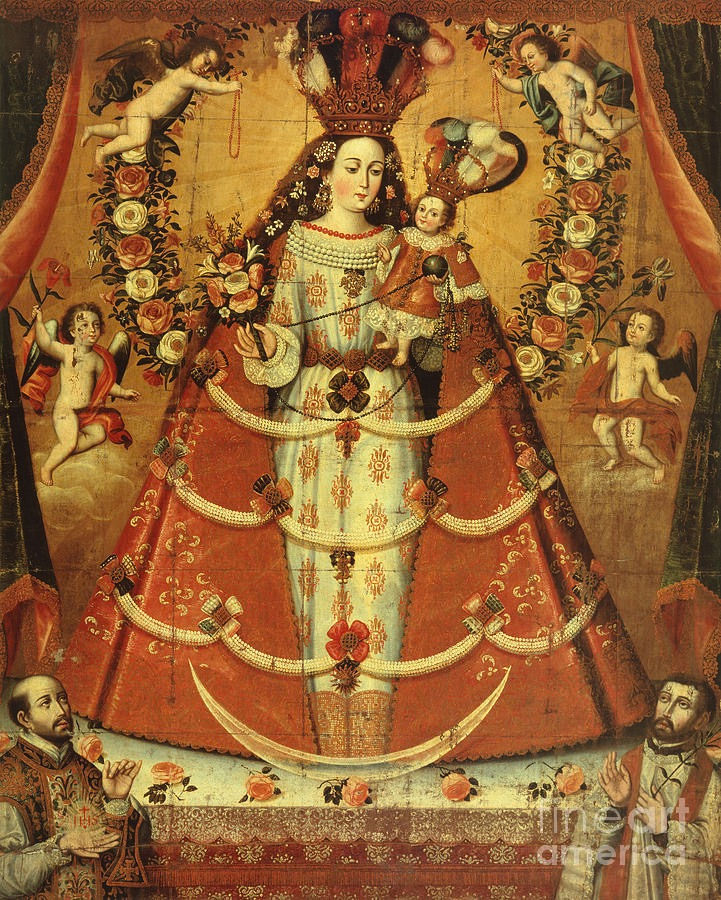
The coexistence of soft, velvety petals and sharp thorns as a symbol of paired love and aggression is a theme that extends even into Christian symbolism. While the Virgin Mary is strongly associated with the blooms of roses, Christ is associated with thorns, as in crown-of. In this way the dual aspect of the plant is divided between gentle, merciful nurturing and harsh, unrelenting suffering.
Another rose association that has traveled from ancient mythology into Christianity is the term “sub rosa,” or “under the rose,” meaning secrecy or confidentiality. In Hellenistic and Roman mythology, Cupid (formerly known as Eros) gifted a rose to Harpocrates, god of silence, so he would not reveal the secrets of Venus (formerly known as Aphrodite). Banquet rooms were decorated with rose carvings signifying that conversations had there should be kept in confidence. Later, roses were carved into the ornate woodworking within confessionals, where parishioners revealed their sinful secrets to the clergy, to symbolize that these confessions were to be kept confidential.

Finally, roses also have a healing presence in ancient mythology and literature. In The Golden Ass, the only completely surviving Roman novel, a man named Lucius who was transformed into a donkey because of his imprudent involvement in magic is instructed by the goddess Isis(closely associated with Inanna and Aphrodite) to eat roses from a floral crown worn by a priest to regain his humanity. In The Iliad, Aphrodite anoints the corpse of Hector with rose oil to prevent it from being consumed by wild dogs. In both cases, the rose, sanctified by the touch of the divine feminine, is the antidote to man being overtaken by bestial nature.
I hope this post has planted a seed of inspiration for your next rose tattoo, which might for you symbolize love, the erotic, the divine feminine, passion, purity, paired pleasure and pain… or something else you can mention in the comments! Please subscribe to The Serpent Speaks to be sure not to miss the next installment in the series, and click below if you are inspired to book your next rose tattoo!


Good stuff, Nixie! 🤘